
Questions Parents
Often Ask
We understand that every parent wants the very best start for their child. Our FAQ section provides helpful information about our learning environment, experienced educators, daily routines, and commitment to your child’s growth and happiness.
What begins to happen at this age?
This is the age where children’s sense of self truly begins to blossom.
Their language expands rapidly, their imagination deepens, and their desire to connect with others becomes much more intentional. Children begin exploring not only who they are, but how they belong within a group and community.
In Roots, children are constantly building relationships, testing ideas, expressing opinions, and learning how to navigate the very human experience of working and playing alongside others.
How do children this age work and play together?
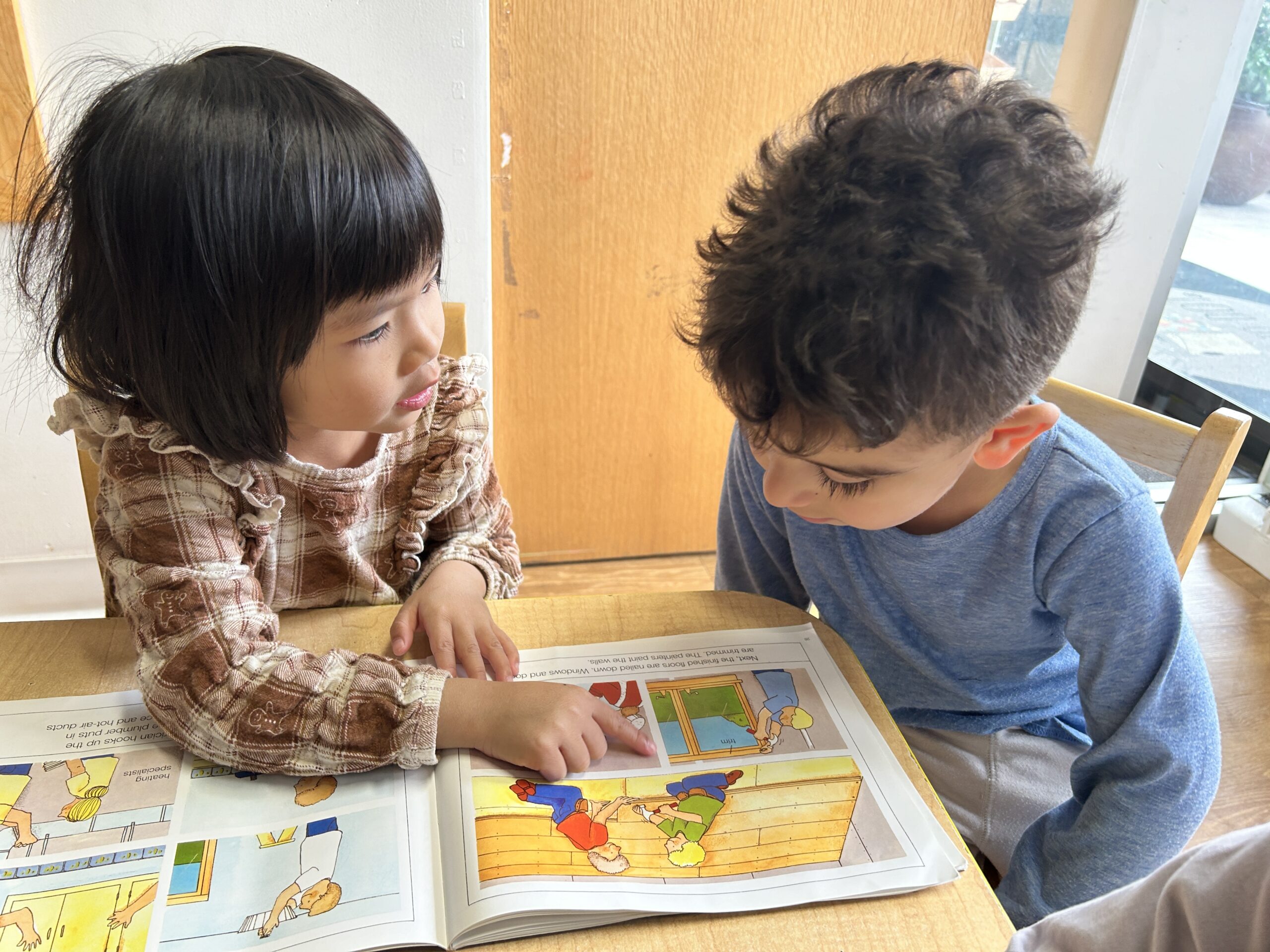
This is where cooperative play begins to truly emerge.
Children move from mostly parallel play into shared play, collaboration, and co-construction of ideas. You may see two or three children building together for long periods of time, negotiating roles, solving problems, or expanding upon each other’s ideas.
And naturally, with this growth also comes conflict.
Children at this age are learning:
- how to enter into play
- how to express boundaries
- how to navigate disappointment
- how to communicate when something feels unfair
- how to repair relationships
You may hear things like:
“You’re not invited.”
“That’s mine.”
“I’m still using it.”
“You hurt my feelings.”
These moments are not viewed as “bad behavior.”
They are opportunities for growth, communication, empathy, and emotional development.
Our educators guide children through these moments with presence, conversation, and problem-solving — helping them learn how to use their voice with clarity, confidence, and care.
What does learning look like in Roots?
Children’s thinking, language, and collaboration deepen rapidly in Roots.
This is the age where children become very interested in storytelling, print, symbols, and the idea that writing carries meaning. You’ll often see them drawing, labeling, recognizing letters, sharing stories, and trying to communicate their ideas in new ways.
To support this stage, we introduce intentional small groups focused on early literacy, handwriting, beginning math concepts, and areas of inquiry and research.
Rather than pressured academics, learning is connected back to the children’s interests, investigations, and natural curiosity—making it meaningful, engaging, and deeply understood.
What social and emotional growth happens here?
Roots is a powerful year for emotional intelligence and relationship-building.
Children begin developing:
- empathy
- perspective-taking
- resilience
- confidence
- collaborative problem-solving
- a stronger sense of belonging
Friendships begin to deepen naturally, but we do not pressure children into friendship labels or forced socialization.
Instead, we create environments where authentic relationships can unfold through shared experiences, play, communication, and trust.
The Rhythm of a Roots Day
The rhythm of the day is flexible, allowing children to follow their natural curiosity while feeling supported by a predictable environment.
Why does this stage matter so much?
Roots is where children begin understanding the impact of their voice, their actions, and their relationships within a larger community.
They are no longer only exploring the world around them they are beginning to understand their role within it.
And through that process, they develop the confidence, communication, and emotional foundations they will carry with them for years to come.
How do children this age work and play together?
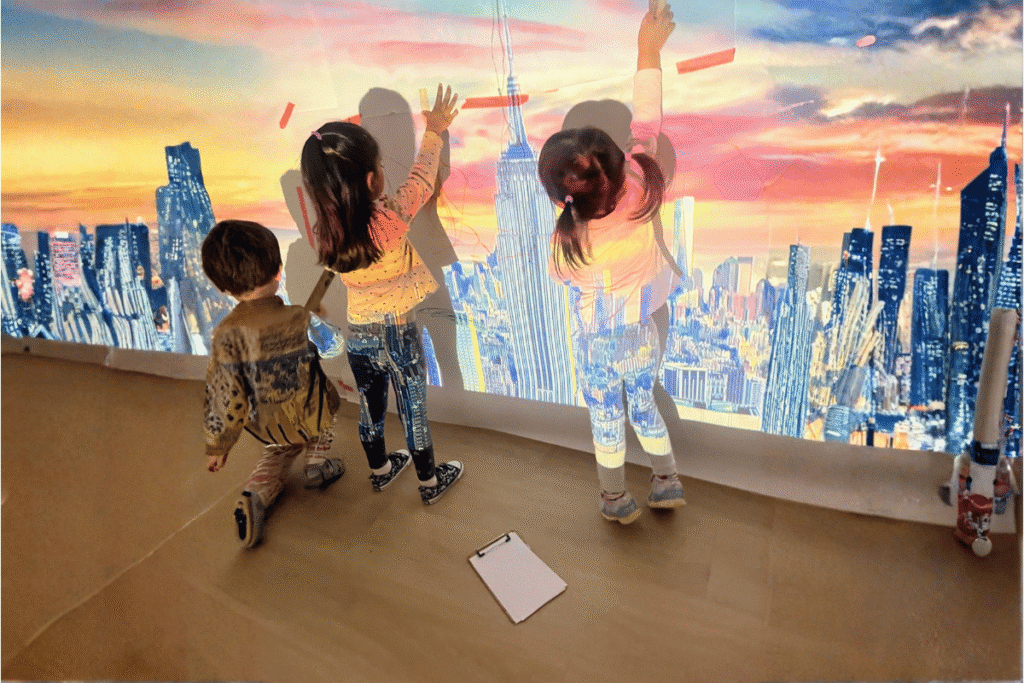
In the Roots classroom, cooperative play begins to emerge.
In earlier classrooms, children spent much of their time exploring independently or playing alongside one another. Now, their interest in others grows stronger, and they begin experimenting with working together.
You may see two children building side-by-side, observing each other’s creations, slowly influencing one another’s ideas. Soon another child may join, curious to participate in the shared play.
This is the stage where children begin learning how to truly enter and exit play, share materials, negotiate ideas, and express their needs.
Because these social dynamics are new, you may also see moments of quick “no’s,” disagreements, or conflicts. These are not problems to eliminate—they are important learning moments.
With the support of attentive educators, children practice using their words, listening to others, and finding ways to collaborate. These early experiences lay the groundwork for the deeper cooperative learning that flourishes in the years ahead.
What parents experience at Dot To Dot
 Qian
QianTrustindex verifies that the original source of the review is Google.
My child attended Dot to Dot three years ago, and it remains one of the most meaningful experiences of his early childhood. He absolutely loved it there. Even now, long after graduating, the staff still greet him warmly by name and seem genuinely happy to see him; it really speaks to the kind of community they’ve built. We always felt like we truly belonged at Dot to Dot. Now in first grade, my child still asks to go back and visit. He misses everyone deeply, including the animals! Their child-led, inquiry-based approach is incredibly valuable. Honestly, no public TK program can rival the kind of thoughtful, nurturing education they provide. And as a bonus, the farm-to-table food they serve is amazing. We are so grateful to have been part of the Dot to Dot community.Posted on Google
 Gavin ArnoldWe couldn’t be happier with our experience at Dot to Dot. From the very beginning, it was clear that the Reggio Emilia approach is truly at the heart of everything they do. The emphasis on curiosity, creativity, and child-led learning has had such a positive impact on our daughter. She is so happy and confident when she’s there, and it’s been wonderful to watch her grow not just socially, but academically as well. We’ve been especially impressed with how they’ve supported her early reading skills and helped prepare her so thoughtfully for elementary school. What really sets this preschool apart, though, is the staff. Every teacher and team member is incredibly warm, attentive, and genuinely caring. They create such a nurturing environment where each child feels seen, valued, and loved. We feel very grateful to be part of this community and would wholeheartedly recommend Dot to Dot to any family looking for a supportive and enriching early learning environment.Posted on Google
 Xime BellidoMy two kids have been attending Dot to Dot—my oldest for two and a half years and my youngest for six months—and I LOVE this place. It is truly a gem for any parent seeking a nurturing and creative environment. There are so many aspects of this school that I love: • Nutrition: They provide high-quality, nutritious vegetarian food. I especially like the food atelier, where the kids don't just eat, but learn about what they are putting into their bodies. • Creative Expression: The art atelier is incredible. It gives the kids the opportunity to explore various materials and learn how to use them. • Imaginative Play: One of my favorite things is how the staff constantly rotates the "provocations" (their version of toys). This keeps the environment fresh and encourages the kids to use their imaginations in new ways every day. • Dedicated Staff: The staff genuinely cares about the kid’s development and well-being. If you are looking for a school that prioritizes emotional growth and creativity, Dot to Dot is absolutely the place to go.Posted on Google
 Emily ManoogianBoth of our kids have gone to Dot-to-Dot, and we have had an amazing experience! They really have a level of care and thoughtfulness that is truly special. Here are a few of the things we love the most: 1. Emotional Intelligence. The school does not punish or shame kids if they do something 'bad'. They are true educators in that they help them through the issue, reflect with them, and teach the to use their words. I have seen this be extremely effective for both of my children as well as their classmates. The children do improve their behavior and they are able to understand their emotions and communicate it. This is a main goal at this age. 2. Food. The food program is wonderful! The kids get healthy, organic, fresh, vegetarian food every day, including many different cultural foods. They also get special cultural foods for every holiday. Our kids favorite, is they get to go to the food atelier every week to learn about food and make food with Chef Aaron (who everyone loves)! The kids will eat food at school (and love them) that they would never have tried at home (lentils, brussel sprouts, raw veggies, etc). The food is delicious, and it has set up an insanely good foundation for our kids. 3. Art: They also have an art atelier with Ms. Frieda where they get to learn about different art mediums and create individual and group projects. The Made Visible Exhibition is also super cool and is a great way for the kids to learn and work together as well as having individual work highlighted. 4. Education. Our daughter is now in kindergarten in Poway and is far ahead of her peers, testing at a 1st or 2nd grade level. Dot-to-Dot more than prepared her for kindergarten. 5. Extra engagement. As part of Reggio-Emilia, they are focused on the kids interests and use that as a medium for teaching. They also get to take field trips that have been lovely, and this year, they now bring in other materials based on the children's interests. For example, they brought in fossils to discuss dinosaurs and time. They also teach independence as they see the children as capable (of reasonable tasks) and respect their thoughts. 6. Care/Love from the staff. The teachers and staff know the kids, their siblings, and the families. My daughter graduated from Dot-to-Dot 8 months ago, but if she comes to pick up with us, all of her previous teachers and the administrators run over to give her a hug and regularly ask about her even if she's not there. 7. Our kids love it! My son loves going every day and my daughter wishes she could still go there. 8. The other families are also wonderful! We've made many friends and there are even mom groups that meet weekly. Each class has also had a group whatsapp chat which has formed a warm community. 9. Professional development. The teachers are regularly getting training for Reggio-Emilia education and improving. The teachers are also warm and very loving! Of course, there will always be small issues that come up, but the head of the school and the teachers are always available to meet and take constructive comments very seriously. They are always trying to improve, and as we are in our 4th year with them, it shows. Note: other reviews mentioned more time off. The school heard this and has less days off this year and moving forward. I am so glad that we found Dot-to-Dot and that both of our kids have been able to attend and grow there! I highly recommend!! For reference, my daughter attended from 2.5-5 years (Sprout, Roots, and Stems - until Kindergarten), and our son started around 20 months in seedlings and is now in Sprouts.Posted on Google
 Pooja DadhaniaI highly recommend Dot to Dot. My son has attended Dot to Dot for over 3 years. We love the school for many reasons. The educators and administrators have provided our son individualized and loving care. The educators are phenomenal. They are supportive, creative, and engaged. They respect and nurture the children and bring the children's ideas to life in the classroom. There are open channels of communication between parents and the school. The school also fosters a wonderful community. We have been very happy here!Posted on Google
 Vivek NarayanadasCannot recommend Dot to Dot more strongly. Our kids have been in a number of different day cares, and we have not found a more supportive and encouraging environment for our kids. The teachers have been consistently wonderful, building lasting bonds with and helping our son to grow; the administration has been supportive and worked creatively with us to help spot and address issues; the children develop close friendships. I really can't imagine a better environment. Having read some of the negative reviews, I am honestly taken aback. Our experience could not have been more positive. We found the administration open, supportive, willing to talk and engage. We found the teachers attentive, caring, and never had any doubt that our kids were extremely well cared for. It is fair to say that the school is closed more often than others, but it is nice to see how much care and attention they pay to staff development which i think contributes to the environment. We are very happy that our son has been part of the Dot to Dot family, and look forward to our younger son joining the school as well.Posted on Google