Navigating the "I Do It Myself" Stage
If your toddler has recently discovered the word “no” and said it approximately eleven thousand times this week, congratulations you’re raising a completely normal 2 to 3 year old. This is one of the most dramatic growth stages in early childhood, and finding the right preschool for a 2 to 3 year old in Carmel Valley or Rancho Bernardo means finding a place built specifically for it.
At Dot To Dot Academy, this age group has its own dedicated classroom, called Sprouts, offered at both our Carmel Valley and Rancho Bernardo locations.
What's Actually Happening for a 2–3 Year Old
Between two and three, children go through a burst of language, independence, and personality that can feel like a completely different kid showed up overnight. A few things are typically true during this stage:
- Language is exploding. Vocabulary, sentence length, and the ability to express wants and frustrations all grow quickly though the gap between what a child understands and what they can say out loud is still wide, which fuels a lot of the frustration.
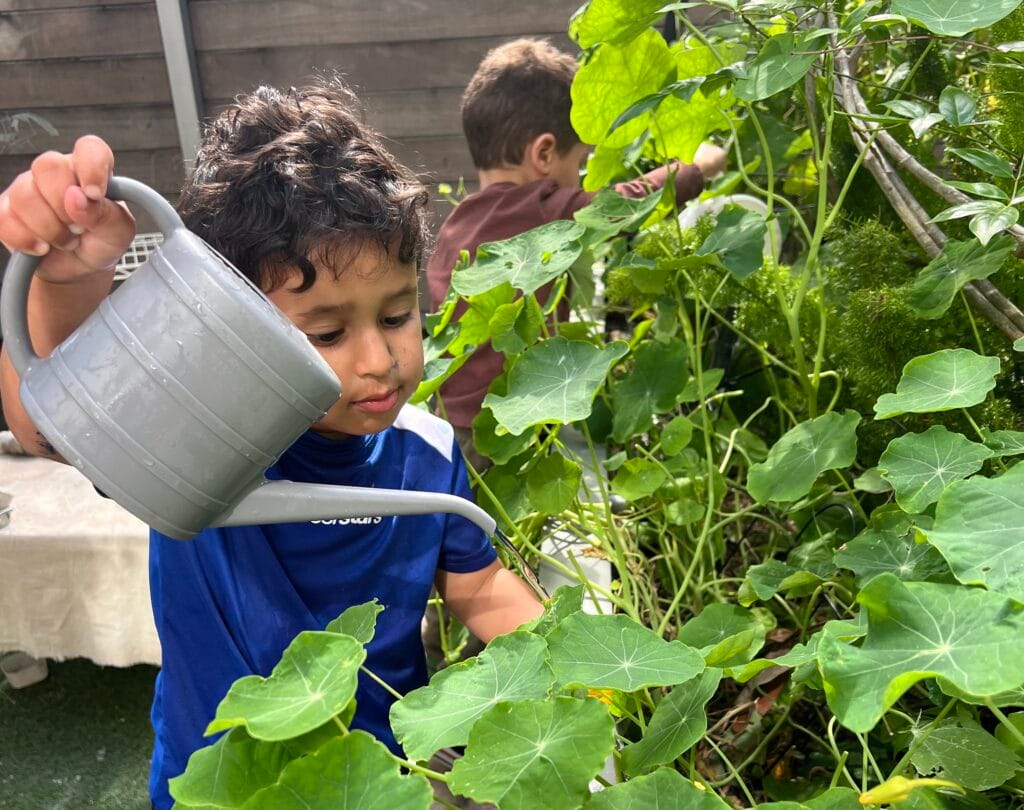
- Independence is non-negotiable. Dressing themselves, carrying their own cup, choosing their own snack children this age want to do things themselves, even when it takes three times as long.
- “No” is a milestone, not a behavior problem. Testing boundaries and asserting preferences is how toddlers figure out where they end and the world begins.
- Potty learning often begins. Readiness varies enormously from child to child, and a good program partners closely with families rather than pushing a one-size-fits-all timeline.
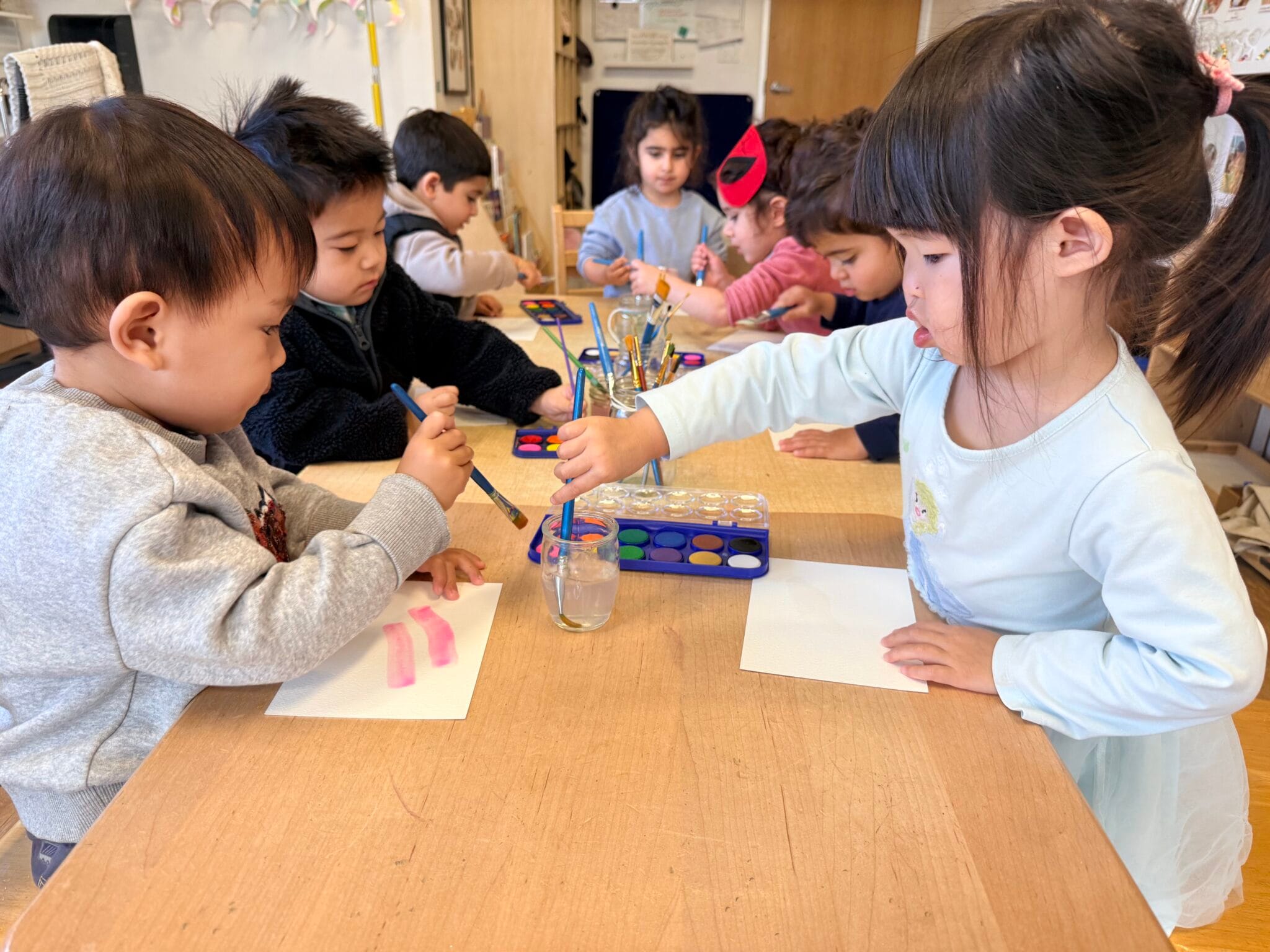
- Play is shifting. Children move from playing purely alongside one another toward noticing peers more closely observing, imitating, and occasionally negotiating (loudly) over a toy.
What to Look for in a 2 - 3 Year Old Program
When you’re comparing preschools for this age in Carmel Valley or Rancho Bernardo, a few questions are worth asking on your tour:
How do you respond when a child says “no” or has a meltdown? The answer should focus on calm guidance and helping children name their feelings not punishment or shame.
How do you support potty learning? Look for a program that treats this as a partnership with families and follows each child’s own readiness, rather than a fixed deadline.
What does independence look like day to day? Children this age should be encouraged to try dressing themselves, serving their own food, and managing small routines, even if it means less efficiency for the adults in the room.
How is language supported? Storytelling, songs, and genuine back-and-forth conversation with educators should be woven throughout the day, not confined to a single “circle time.”
What does play look like? Ask specifically how educators support the shift from parallel play toward the first flickers of shared play and friendship.
Inside the Sprouts Classroom
Sprouts classrooms at both our Carmel Valley and Rancho Bernardo locations are capped at 12 children with two educators present through most of the day, so every child gets seen as an individual rather than managed as part of a crowd.
A typical day moves through arrival and morning gathering, outdoor exploration, small group work, afternoon enrichments and projects, rest, snack, lunch, and quiet reflection time flexible enough to follow a child’s curiosity, but predictable enough to help toddlers feel secure.
Educators are trained to treat the “no” phase, the potty-learning ups and downs, and the occasional toy dispute not as problems to fix, but as the raw material of emotional development. Rather than rushing children past frustration, the goal is to help them build the vocabulary and self-awareness to work through it skills that carry directly into the cooperative play and early literacy work that begins in our next program, Roots.
Two Locations, One Approach
Whether you’re closer to Carmel Valley or Rancho Bernardo, Sprouts follows the same philosophy and daily rhythm at both campuses, so families can choose whichever location fits their commute without compromising on consistency or classroom quality.
Will My Child Make Friends?
Many parents ask this, especially if their toddler has spent most of their time at home. The honest answer is: this is often when the very first real friendships start to form. Children begin noticing specific peers, returning to the same play partners, and sharing small moments of connection the seeds of empathy and belonging that will keep growing in the years ahead.
Come See Sprouts in Person
If you’re looking for a preschool for your 2 to 3 year old in Carmel Valley or Rancho Bernardo, the best next step is a tour. Come see how a classroom built specifically for this stage handles the big feelings, the bigger independence, and everything in between.